Translate

Showing posts with label Top 5. Show all posts

Thursday, 24 August 2017

Top 5: Steven Soderbergh Movies


Along with Tarantino and the Coen Brothers, Steven Soderbergh is one of the seminal directors of 1990s American cinema. He garnered mainstream attention for the indie circuit and exploded onto the scene, leading Roger Ebert to call him “the poster boy of the Sundance generation” and since then he has never looked back. In a career spanning nearly three decades the director has rapidly become one of the most unique and versatile filmmakers in Hollywood, as well as very much outside of Hollywood, from slick heist movies to raw crime thrillers, straightforward emotional dramas to off the wall experimental projects Soderbergh has traversed almost every genre.

What is most remarkable about Soderbergh’s career was his ability to switch effortlessly between the most star studded of blockbusters to the zaniest arthouse movies. He struck a perfect balance of appealing to a wider audience whilst injecting his stylistic tendancies in the films that both deliberately set out to alienate their audiences, as well as the ones that just sought to entertain them.

After a hiatus from directing feature films Soderbergh has now returned with the crime-comedy ‘Logan Lucky’ and to celebrate (because Soderbergh is back and that’s worth celebrating) I’m picking out my five favourites from the indie darling. However, I also have a few honourable mentions in the form of ‘The Limey’, ‘Erin Brokovich’, ‘The Informant’, ‘Contagion’, Magic Mike’, and ‘Behind the Candelabra’ as well as all of ‘The Knick’. But now, here are the top five.


5: Sex, Lies and Videotape

Soderbergh’s debut feature may have been the most important American film to emerge from that era, it changed the entire film industry upon its release and paved the way for the indie boom that was to follow throughout the 1990s. When it won the Palme d’Or at the 1989 Cannes Film Festival, Soderbergh became the youngest director to ever receive the prize and his emotionally heavy drama that is as nuanced as it is mature. Soderbergh handles the film with a sense of craftsmanship well beyond his age, and finds depth and meaning to the most irreverent of actions. The screenplay is littered with philosophical musings about sexuality and relationships but never draws attention to them, letting its themes flow naturally through the narrative and giving its cast plenty f opportunities to convey the raw emotion behind each scene. It is both breezily light as well as unexpectedly complex, and the overall effect is sublime.


4: Che

Depending on who you ask, Soderbergh’s two part biopic is either a masterpiece or an ambitious failure, and while I personally don’t see it as his definitive masterpiece I think it is most definitely a masterful film. It’s a film with flaws, but the overall impact is so mesmerising and immersive that one can’t help but be awestruck at Soderbergh’s sheer filmmaking ambition. Chronicling the life of revolutionist Che Guevara, the movie is less about deconstructing the man and more about deconstructing an icon, trying to process why to this day Guevara remains as one of the most revered as well as one of the most reviled figures of the 20th century. Its gargantuan runtime is daunting, but it conveys how much struggle and endurance went into each action the revolutionist carried out. Featuring a powerhouse performance by Benicio Del Toro as the titular figure, ‘Che’ is an epic in every sense of the word.


3: Out of Sight

Watching ‘Put of Sight’ today makes it feel like even more of an oddity than it must have felt like in 1998. By all laws of consistency no movie should be this enjoyable and entertaining whilst also being this complex and this artfully constructed. The script is so sharp that you could cut yourself on it, with not a single line of dialogue or narrative beat feeling like a throwaway element. Every aspect of the movie has a purpose whether it is to further our understanding of the characters or draw us deeper into the plot, but for it all to feel as involving and as entertaining as it does here is something very rare. Soderbergh throws in plenty of stylistic flourishes but as usual he also knows when to let his cast do the heavy lifting, and when that cast happens to be made up of George Clooney and Jenifer Lopez delivering some of the best performances of their respective careers, that helps. Clooney’s charm is almost infectious but the nuances of his performance never fail to hint as a darker side, the same goes for Lopez whose seductiveness is only matched by her grit. But the finest bit of all might be their explosive chemistry that is worth the price of admission all on its own.


2: Ocean’s Eleven

Has there ever been a movie as wonderfully re-watchable as ‘Ocean’s 11’? It’s a trick question because no, there isn’t (if you’re me then an argument could be made for ‘Evil Dead 2’ but that’s beside the point) Soderbergh may be an indie director at heart, but with this slick heist film he managed to accomplish more with one dive into blockbuster territory than most filmmakers who spend their entire careers there. I’d be lying if I said this was a particularly complex or boundary pushing entry in his career, but it’s just so damn entertaining to watch, regardless of whether it is your first or fiftieth viewing. Its ensemble cast that includes George Clooney, Brad Pitt, Matt Damon and Julia Roberts not only shine individually but also bounce off of one another with such pitch perfect precision that it just feels like it was made to be. Soderbergh drew upon every era of the heist movie to create the definitive one in ‘Ocean’s Eleven’ that worked so brilliantly that just talking about it here makes me want to watch it again.


1: Traffic

At the dawn of the new millennium Soderbergh was a filmmaker with ten years’ worth of experience, but even that doesn’t account for the how brilliant his work is on the masterpiece that is ‘Traffic’. It features the ambition, layered storytelling and ensemble cast that many other films on this list have, but is wrapped in a package so intricately constructed and perfectly realised that it stands as Soderbergh’s finest achievement to date. Despite being very much a political film, the movie never preaches to its audience and instead displays the unfolding events with a perfect blend of style and realism. Little touches like Soderbergh developing a different colour scheme for each chapter help draw the viewer further into this seedy underworld, in a structure that effortlessly interweaves several overarching stories. It earned Soderbergh an Academy Award for Best Director as well as a Best Supporting Actor award for Benicio Del Toro  but I believe it absolutely should have won in the Best Picture category as well because not only is it Soderbergh’s masterwork but it also stands as one of the best achievements of modern American filmmaking.

Tuesday, 11 July 2017

Top 5 Threequels


The analogues of cinema are littered with abysmal threequels, movies that fail to stick the landing on the third attempt. As well as being outright bad movies it’s hard not to feel the sting a little more if the preceding movies in the trilogy were excellent. So many promising trilogies end in disaster when the third one overhauls the level of quality in favour of terrible nonsense. Even if the second movie is a disappointment a great third movie can still redeem a franchise but so many somehow get even worse upon their third entry. ‘Alien 3’, ‘X-Men: The Last Stand’, ‘Spider-Man 3’, ‘Blade Trinity’, ‘The Matrix Revolutions’, ‘Superman 3’, ‘Batman Forever’, ‘The Dark Knight Rises’, ‘Terminator: Rise of the Machines’, Pirates of the Caribbean: At World’s End’ and ‘Hangover 3’.

But amid these catastrophes, a few third instalments actually rise to the challenge and manage to not only close their respective trilogies on a high note but go above and beyond what the previous instalments accomplished. For this top 5 said threequels have to be a definite improvement or of similar quality to their previous entries. So while ‘Return of the Jedi’ is fantastic, it’s decidedly a downgrade from the masterpiece that is ‘The Empire Strikes Back’.

As an additional rule I’m going to say that each instalment should be the end of their respective franchises, concluding the story in a satisfying and masterful way. So that means I have to exclude ‘Goldfinger’, ‘Harry Potter and the Prisoner of Azkaban’ and ‘Indiana Jones and the Last Crusade’ (as much as we would love to forget that there was another). Also ‘Toy Story 3’ is great but, go figure it didn’t make the cut..


5: Pusher 3

Nicholas Winding Refn made his start with the low budget thriller ‘Pusher’ which not only launched his career but also that of Mads Mikkelson. Though he originally never wanted to expand upon his Copenhagen crime saga the financial success of the first film prompted Refn to do just that. With each instalment following a different character through the dark and gritty underworld Refn established, the director was essentially left with a blank slate from which to craft each new story (with this one focussing on a Serbian drug lord caught in an ensuing power struggle) and it shows, as his freedom in storytelling and boldness of vision never fail to shine through. This being Refn the movie is loaded with brutal violence and gallows humour but surprisingly there’s an oddly profound nature to the movie as well, ending one of cinema’s most underrated and best trilogies.


4: Before Midnight

Speaking of underrated trilogies though, we now have Richard Linklater’s astonishing magnum opus that is ‘The Before Trilogy’. Filmed over the course of 18 years (take that, ‘Boyhood’) by recapping the same couple once every nine years into their relationship, the trilogy goes out on a high note with ‘Before Midnight’. It’s more hard hitting and less joyous than the previous two instalments as Ethan Hawke and Julie Delpy’s romantically entangled couple now find themselves facing marital issues. But the chemistry between these two actors is something that cannot be faked, it’s built up from years of experience and bonding with one another which is evident in every encounter they share. It’s poignant, humorous and sometimes heart-breaking but always amazing.


3: The Lord of the Rings: The Return of the King

It’s no accident that the final instalment of Peter Jackson’s epic fantasy saga still holds the record for most Oscars received by a single film (tied with ‘Ben-Hur’ and ‘Titanic’ at 11 apiece) as honouring this movie was the Academy’s way of honouring the entire trilogy. But even when taken on its own value, ‘Return of the King’ is a spectacular piece of filmmaking, with such an epic and grandiose vision that any one of its incredible set pieces might seem daunting to any other filmmaker. But at this time in his career Jackson was in complete control of his creative process, brilliantly crafting each scene and invigorating it with a spectacular sense of awe inspiring brilliance. But amid all of the gigantic battles Jackson never forgets to focus on what is intimate and poignant. Those battles carry such weight because we are attached to the characters and their long journey, we feel their struggle and are rooting for them to succeed every step of the way. Few films have such an incredible gift to make grown men well up in an instant with lines such as “I can’t carry it for you, but I can carry you” or the iconic “You bow to no one.”

2: Three Colours: Red

When it comes to picking a definitive masterpiece from Polish director Krzysztof KieÅ›lowski you are spoiled for choice from ‘Dekalog’ to ‘The Double Life of Veronique’. But his most enduring work might just be his ‘Three Colours Trilogy’, a filmmaking achievement so intricately staged and masterfully executed that it almost defies belief. His trilogy marks the perfect blend of style and substance, a series of creative choices that are dazzling to behold but never, not even for a second, feel like they are compensating for a lack of depth. They are written to be personal and affecting, with the final instalment ‘Red’ being one of subversive brilliance. Described as the anti-romance it’s remarkable in the way that KieÅ›lowski takes these complex emotions and distils them into a dazzling experience. It was to be his final film due to his death in 1994, so it not only served as a stunning finale to an amazing trilogy, but also the end of a great filmmaker’s illustrious career.

1: The Good, the Bad and the Ugly

Looking back on it today, it’s hard to imagine a time when Clint Eastwood was viewed as an odd choice for a western protagonist, but that is exactly how it was viewed in 1966, as well as every other creative decision undertaken by Itaian director Sergio Leone. But in the decades since his entire way of filmmaking has become synonymous with the western genre, redefining its very essence and cementing a legacy that few films in the history of cinema have ever surpassed. The tale of three gunslingers (Eastwood, Lee Van Cleef and Eli Wallach) hunting for a stash of buried gold has Leone’s style bleeding from every scene. His dry humour and patient character moments both contrasts and complements the sudden bursts of violence that litter the film. When the violence does appear it’s easy to understand why Leone became the icon we now know him as, his editing, use of music and direction was unmatched by anyone else in the genre. Leone’s previous westerns with Eastwood redefined a genre, ‘The Good, the Bad and the Ugly’ redefined all of cinema.

Saturday, 8 April 2017

Top 5 Cannibal Movies

With ‘Raw’ hitting cinemas this seemed like an ideal time to select my top five cannibal movies. In all honesty I don’t really have anything to add to this introduction, fairly straightforward right? Well I suppose I should elaborate that my criteria for picking these five and their order comes down to a combination of their quality and how heavily they feature the cannibalism in question. After all this is a list of cannibalism first and foremost so once I’m satisfied that the cannibalism within the movie plays a large enough part or is iconic enough to earn a spot. Then I take quality into account to determine the best, and of course by “best” I just mean my own personal opinion on what constitutes the best, because why not? So now onto the top five.


5: Ravenous

Starting off is a film that takes a somewhat unusual approach to one of the most horrifying taboos of human society. As opposed to being a conventional horror film this 1999 movie starring Guy Pearce and Robert Carlyle takes a darkly humorous approach to the story of an infantryman (Pearce) who upon investigating a case of disappearances from an isolated outpost discovers a frontiersman who has been feasting upon human flesh. Director Antonia Bird does an intriguing job of blending the films many contrasting elements, from its dark comedy to its fascinating thrills and the underlying horror of it all. Not to mention its terrific performances from all involved.


4: The Silence of the Lambs

It would not be a list of cannibal movies without an appearance from the one and only Dr Hannibal Lector. Played masterfully by Anthony Hopkins in a performance that would earn an Oscar for Best actor for just 16 minutes of screen time. Hopkins’ portrayal of the character possesses such an eerie stillness that never fails to unnerve the viewer, contrasting the sheer ruthlessness of Lector with his calm demeanour. But it is easy to talk about nothing but Hopkins when discussing ‘The Silence of the Lambs’ which is a shame as every other piece of the film is equally as excellent, including Jodie Foster’s phenomenal performance as Clarice Starling that earned her an Oscar as well.

In fact on the subject of Oscars one must remember that ‘The Silence of the Lambs’ is one of only three films to have ever taken the main five Academy Awards (Best Picture, Director, Actor, Actress and Screenplay) and remains the only horror film to have ever won the award of Best Picture. Johnathon Demme’s masterwork remains just as brilliant today as it was over 25 years ago. In fact it is almost certainly the best film out of this selection, but sadly the cannibalism in question is not what you would call integral to the plot of the film and it’s discussed much more than it is seen. In other words we get to hear Lector describe that delicious meal of human “liver, fava beans and a nice chianti” but we never get to see it. Disappointing I know, but a great film regardless.


3: Delicatessen

Made as a homage to the works of Terry Gilliam, this 1991 dark comedy film about a butcher living in a post-apocalyptic future who lures in victims to be sold as meat. One could almost call the film whimsical (a word rarely associated with cannibalism) in that it contains a darkly humorous streak as well as some truly terrific cinematography and set pieces. Despite being conceived as a homage to Gilliam, the directors of ‘Delicatessen’, Jean-Pierre Jeunet and Marc Caro, make the film endlessly unique through both its style and substance. It is detached and satirical in nature but by no means is that to say that the film cannot be intense when it wants to be, but for any fright it might cause the viewer they are just as likely to be uncomfortably laughing at it.


2: Bone Tomahawk

If you heard of this stylish and violent Kurt Russell western from 2015 (no, not THAT one) you may be confused as to why it is on here. But those who have seen it will identity it as one of the best genre subversions and merges in recent memory. Transitioning from a brutal western to a terrifying horror film in minutes in which a group of gunslingers set out to end a series of brutal killings committed in their town only to discover that the culprits are a tribe of savage cannibals who throw them into a fight for survival, ‘Bone Tomahawk’ is astonishingly effective.
Not only does the movie’s thematic current of pioneering civilisation play into the western genre, but they’re made all the more poignant when the alternative to civilisation is being eaten if you don’t have your wits about you. Amid all of the pulpy violence and brutality though lies an undercurrent of poignancy that carries surprising weight. ‘Bone Tomahawk’ is utterly unique and utterly terrifying in every regard. See it for Kurt’s moustache alone.


1: Eating Raoul

Once again my choice here takes an oddly satirical turn rather than any kind of conventional horror. Maybe I just admire the way a filmmaker takes the most taboo and horrendous of subjects and injects a darkly comic streak into it. Paul Bartel’s cult classic ‘Eating Raoul’ is such an oddity that I almost feel obligated to give it the number one position. The story revolves around an uptight couple who begin murdering swingers and eventually eating them as a meal. Bartel not only uses the cannibalism as a metaphor for consumerism but he handles the whole subject with such a deft touch of dark comedy that you’ll find it as hilarious as it is disturbing.


It is so sharp it its satire and so effective in its humour that the nonchalant attitude it carries regarding the murders and meals is too harrowing to really believe. Naturally it is over the top in a certain regard but the way it’s contrasted with the subtly of other aspects only make it all the more remarkable. Held up by a number of great performances as well as its slick screenplay, watertight satirical tone and deliciously dark sense of humour, ‘Eating Raoul’ is the funniest film about cannibalism and, for my money, also the best. 

Sunday, 29 January 2017

Top Ten Sundance Grand Jury Winners

So today the Sundance Film Festival wraps up for another year, bringing forth a fine selection of movies that I look forward to catching later in the year and acting all snobbish when I know what that movie is about and who made it while everyone else is just hearing about it, but not quite as snobbish as the select few who attended the festival and saw said movie. Anyway, for over thirty years now the festival has provided a platform for independent filmmakers and like any festival is chooses a select few each year to present with an award.

For Sundance the most esteemed prize it can give is the Grand Jury Prize, honouring what the year’s jury deems to be the best film of the festival. In honour of that I thought I would provide a list of my ten favourite Grand Jury Prize winners in the history of the Sundance Festival. So without further ado, here it is.

10: Like Crazy
In case you needed reminding just what a tragedy Anton Yelchin’s death last year was, one of his finest roles came in this drama that impressed the 2011 Sundance Jury enough to take the top prize. The film tells the story of Anna played by Felicity Jones, a British exchange student who falls in love with an American student, Jacob (Yelchin), only to be separated from him when she is denied re-entry into the United States after staying in the country longer than her student visa allows. When taking their performances as they are, each actor is brilliant, sharing excellent chemistry and heart wrenching nuances when separate. But the story behind the films development makes you appreciate it even more, with director and co-writer Drake Doremus assembling a 50 page outline of the story in which Yelchin and Jones improvised almost all of their dialogue. It’s an extraordinary undertaking and makes for an emotionally resonant movie.

9: Poison
Before he went on to direct acclaimed features such as ‘Far From Heaven’, ‘I’m Not There’ and ‘Carol’, Todd Haynes began his career with this provocative, three-part exploration of AIDS-era queer perceptions and subversions that established him as a formidable talent and figure of a new transgressive cinema. It is a remarkably strong and bold debut film, boasting a stylistically and conceptually audacious piece of filmmaking. Haynes manages to make each of his three stories distinct and unique in their visual style but links them with a strong thematic component that gives the film as a whole a strong impact. Haynes has continued to explore the themes he raised in ‘Poison’ and it served as the perfect platform from which to launch himself as a bold new voice in an ever changing world.

8: Welcome to the Dollhouse
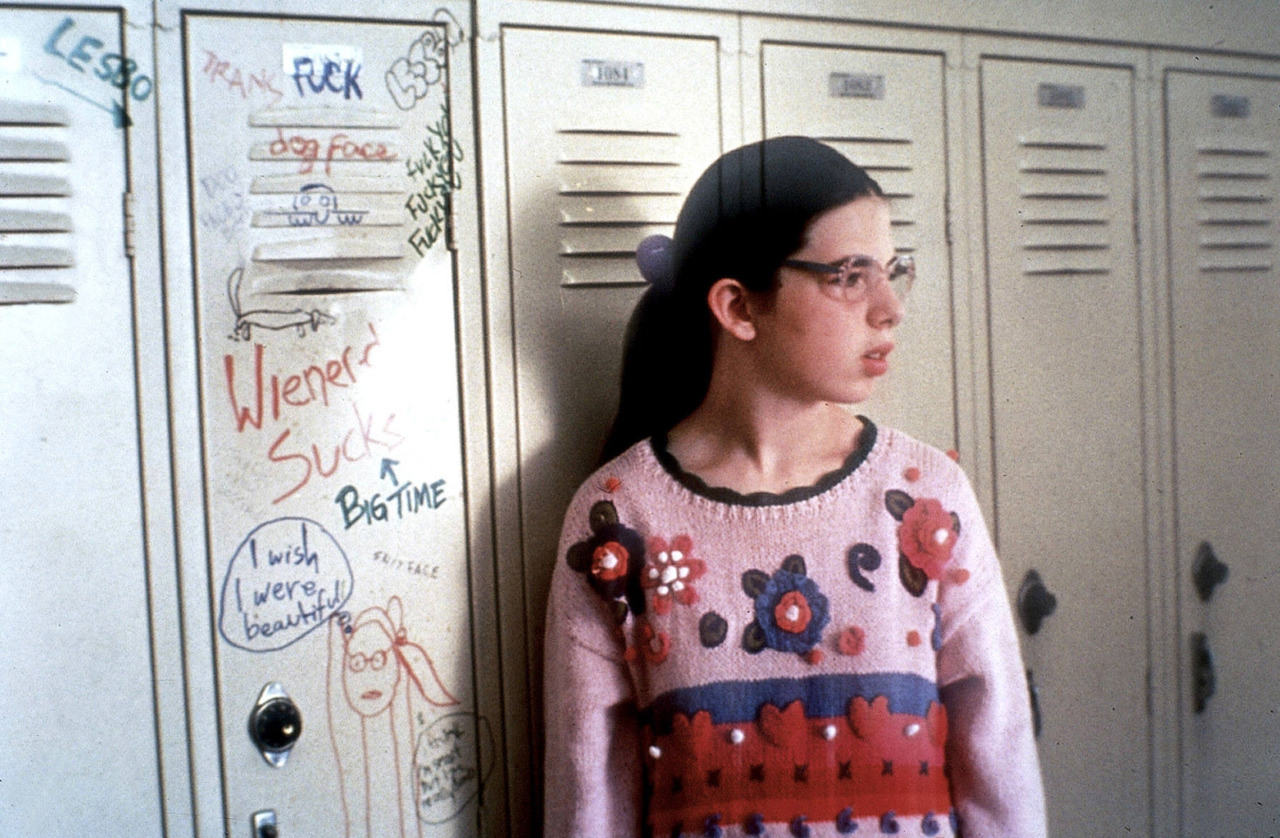
Coming of age films are rarely as painfully hilarious as Todd Solondz’s surprise hit of 1996. It demonstrates the there are few forms of torment more cruel than the way unpopular kids are treated at school. Admittedly some may be inclined to disagree with me on that, but I’d challenge you to sit through ‘Welcome to the Dollhouse’ without wincing at the intense honesty with which Solondz recounts his story. It helps that Heather Matarazzo is fantastic in the lead role as Dawn, an outsider in all walks of life, tormented at school, excluded from social circles and ignored by her own family. Some storytellers would show some restraint and sugar coat the material but Solondz remains faithful to his tone and perseveres in his agonizingly funny feature.

7: Primer
‘Primer’ is one of those films where the audience became so pre-occupied with the mechanics of the plot (which are mind numbingly brilliant with its experimental plot and dense dialogue) that they forget to acknowledge the fantastic filmmaking that is on display. Its low budget does not restrict Shane Curreth at all, who uses his directorial skills to make every shot meaningful and weighty. It is dense and innovative in its structure, ‘Primer’ is sure to challenge viewers on an intellectual level like few other movies ever have. It is methodical and heavy on technical jargon, but for those willing to listen it rarely feels overwrought or overtly dense. Whether it infuriates you or connects with you, it is bound to start a discussion and that is what bold voices  

6: Fruitvale Station
Perhaps the best thing about Ryan Coogler’s directorial debut is how it seems to put aside the political aftermath of the story of Oscar Grant in favour of telling a very personal and intimate portrait. While this story holds great weight in the discussion of race relations and the role of police officers, Coogler’s script allows us as an audience to simply hang out with Grant for a day. We witness his struggles, flaws, hopes, dreams and triumphs. We empathise with him on an itimate level, brought out more by Coogler’s delicate direction and a truly terrific performance by Michael B Jordan. This makes the ultimate, and all true tragedy all the more heart breaking. Just a few years on Coogler is fresh from his international acclaim after directing ‘Creed’ and is slated to helm Marvel’s ‘Black Panther’, all thanks to this expertly crafted independent film.

5: You Can Count On Me
As we speak, numerous industry commentators are speculating on how many awards Kenneth Lonergan’s 2016 drama ‘Manchester by the Sea’ will win. Sixteen years before his recent masterwork premiered at the Sundance Film Festival, Longeran attended the festival with his directorial debut ‘You Can Count on Me’. Telling the story of Sammy, played by Laura Linney, a single mother living in a small town, and her complicated relationships with her brother Terry, played by a pre-Hulk Mark Ruffalo. Boasting two extraordinarily tender and heartfelt performances by Linney and Ruffalo its seemingly simple story is superbly crafted and extremely moving.

4: American Splendour
In an era when comic book movies reign supreme in almost every walk of movie life now, one film that seems to have been forgotten in the shuffle. Shari Springer Berman and Robert Pulcini’s biopic about Harvey Pekar, the author of the American Splendor comic book series. Pekar’s comic was autobiographical in itself, chronicling his daily life and frustrations that were to him, more exciting and invigorating than any superhero. It stunningly integrates Pekar’s art with his reality, with the script and direction combining the various elements of his life, all underpinned by an excellent performance by Pail Giamatti, into a strikingly stylish portrait.

3: Winter’s Bone
Jenifer Lawrence’s popularity may have skyrocketed since 2011 and though I’m a fan of most of her work since then, for me her high point and best performance can still be found in Debra Granik’s independent film. Lawrence plays a teenaged girl in the rural Ozarks of the central United States who, to protect her family from eviction, must find her missing father. It is bleak and haunting in both its visual style and its themes that deal with family ties, poverty and self-sufficiency as well as how all are changed next to the influence of the underworld methamphetamine labs. Lawrence in particular brings a poignant performance that is punctuated with the rawness and difficulty of the world she lives in but still retains a sense of hope and optimism that elevates the film even further.

2: Whiplash
It may be recent but I think I can safely say that Damien Chazelle’s intense drama will go down as one of the greatest films to ever screen at the Sundance Festival, let alone win its esteemed Grand Jury Prize. From the opening frame the psychological intensity and pulsating rhythm of the film are overtly obvious and maintained for its entirety, right up until that painstakingly brilliant finale that, dare I say it, stands as potentially the greatest ending in cinema history. It is easy to talk about ‘Whiplash’ and do nothing but discuss J.K Simmons frighteningly forceful yet infectiously charismatic performance that rightly won him an Oscar, but spare some thought for Miles Teller’s remarkably empathetic lead role. Then there is Chazelle’s masterful direction, which elevates the already watertight screenplay to the highest levels of perfection. Given he is now sweeping the awards circuit yet again with ‘La La Land’ it is not difficult to see why ‘Whiplash’ launched him onto the scene in such a powerful way.

1: Blood Simple
I am inclined to the argument that ‘Whiplash’ is the superior film out of these top two, in fact given a few more years where its legacy can further cement itself into our collective consciousness I might place it at the number one spot. But when it comes to demonstrating just how valuable the Sundance Film Festival is in providing new artists with a platform to launch their careers and go on to achieve greatness, then no other product of the festival has yet to match that of Joel and Ethan Coen, who arrived at the 1984 festival with their directorial debut. But even putting that aside ‘Blood Simple’ is still a truly fantastic movie. The neo-noir is packed with stylish directorial choices, excellent performances and a tense and thrilling plot that evokes the likes of Alfred Hitchcock. Like many of the Coen’s films it is as darkly hilarious as it is brutally violent, balancing each contrasting element with a strikingly bold visual palette. It introduced the world to a new generation of filmmakers who have been crafting amazing films ever since.

Sunday, 12 June 2016

Top 5: Brian De Palma Movies


So having seen the documentary ‘De Palma’ I thought now would be the best opportunity to give a quick rundown of my top five films from the acclaimed director. There isn’t really anything else to say other than a few honourable mentions, the first being ‘The Untouchables’ which may be surprising but maybe that just goes to show how tough the competition is that De Palma’s prohibition epic didn’t quite make the cut. It’s still a fantastic and layered film, with David Mamet’s sharp script, Ennio Morricone’s invigorating score and an Oscar winning performance by Sean Connery, as far as I know it’s still the only Oscar winning film in which someone is beaten to death with a baseball bat. I’d also be remised if I didn’t give a shout out to ‘Body Double’, ‘Dressed to Kill’, ‘Sisters’, ‘Phantom of Paradise’, ‘Passion’, ‘Mission: Impossible’ and if I can forget the rest of the movie happened then I’ll also include the opening shot of ‘Snake Eyes’ But now onto the top five.

5: Carlito’s Way

In 1993 De Palma reunited with Al Pacino to craft a their second gangster epic together, in which Pacino plays an aging criminal recently sprung from prison by his lawyer, played by Sean Penn in one of his best performances,  and decides to give up the lifestyle once and for all, only to be dragged back in against his will. Like ‘Scarface’ it’s a large and sprawling portrait of a criminal and the world he inhabits, but ‘Carlito’s Way’ is perhaps more mature and restrained. It’s fascinated by the reasons why men are drawn back to their origins, why the violence and betrayal of the criminal world somehow keeps its hold on Carlito despite his intentions to leave it behind, a compelling portrait a man who wants to be better than he is. It also features some of the finest set pieces of De Palma’s career, especially its spectacular finale.

4: Carrie

Having created a storm on the underground indie circuit De Palma finally secured his breakthrough hit with his 1976 adaptation of Stephen King’s bestselling novel, ‘Carrie’. This is a real horror film, not made up of the recycled parts of classics, not relying on cheap jump scares or flashy special effects. ‘Carrie’ builds its terror through a study of its characters, by creating a poignant human portrait and though it doesn’t go completely off the rails until it’s last twenty minutes, that climax is earned through making its title character as fleshed out as possible, creating a conclusion that is as tragic as it is satisfying. Not only was the film a box office hit that well and truly launched De Palma’s career, it also earned Oscar nominations for its stars Sissy Spacek and Piper Laurie, a feat unheard of in the horror genre.

3: Femme Fatale

Possibly the most purely De Palma film of them all, not only is it a superb showcase of style and craftsmanship, but the way the movie unfolds and takes you on a rollercoaster ride of twists and turns, defying expectations, deceiving and surprising you with each new plot thread. After pulling off a daring heist during a gala premiere at the Cannes Film Festival and double-crossing her colleagues, a thief (Rebecca Romijin) leaves for a new life in America only to find herself the target of an ambitious photographer (Antonio Banderas) and her recently released former partners. Like the best of De Palma’s movies it’s smart, sexy and stylish, anchored by a set strong and layered characters all portrayed brilliantly by their respective actors. ‘Femme Fatale’ is filmmaking at its purest.

2: Scarface

Everyone has quoted Pacino’s iconic last stand, whether they know they are reciting ‘Scarface’ or not, at some point everyone has uttered those magic words. Chronicling the rise and fall of a ruthless Cuban drug dealer Tony Montana (Al Pacino) this may be the most spectacular, stylish and excessive project of the directors career. With a script penned by Oliver Stone the movie is aggressive and violent for an aggressive and violent era of American history, brimming with greed and indulgence. Pacino’s performance is legendary, over the top, bouncing from wall to wall and completely engrossing. Under De Palma’s direction the film has an energetic and almost wearying sensibility to it, hyper stylised and features some of the bests scenes of his entire career from the infamous chainsaw torture sequence to the explosive attack on Montana’s compound (one shot of which was directed by Steven Spielberg), featuring multiple explosions, wave after wave of attackers being gunned down and of course Pacino familiarising us with his tiny associate.

1: Blow Out

De Palma’s masterfully crafted thriller stands as one of the greatest thrillers outside of Hitchcock’s calibre, in fact scratch that because with this De Palma made a suspense film worthy of Hitchcock himself. John Travolta plays a movie sound effects technician who, while recording sounds for a low-budget slasher film, inadvertently records audio evidence of an assassination involving a presidential hopeful. ‘Blow Out’ is a film fuelled by obsession, one that plays out in an enthralling and visceral manner, but also one of surprising maturity and thoughtfulness. It is permeated by real cinematic intelligence and has a number of great performances to accompany it, with Travolta at his best as well sympathetic Nancy Allen and sleazy John Lithgow. It’s a challenging, stimulating and impeccably designed film that stands as De Palma’s masterpiece.

Friday, 13 May 2016

My Ten Favourite Palm d'Or Winners


So the 2016 Cannes Film Festival is well under way and as George Miller and the rest of this year’s jury deliberate over what will take the top prize, the famed Palme d’Or. This prize goes back for nearly three quarters of a century and though it’s gone by many names and titles it remains of one of the most prestigious prizes in cinema, awarded to films of a ground breaking, boundary pushing and not at all sometimes pretentious nature. Over the course of their history they have given the award to some truly incredible films and today I’m going to pick my ten favourite Palm d’Or winners.

But here’s the problem, there are a lot of films to choose from here and there are so many that can easily be called great. So here are a few honourable mentions ‘The Tin Drum’, ‘if…’, ‘The Leopard’, ‘All that Jazz’, ‘The Wages of Fear’, ‘Brief Encounter’, ‘M*A*S*H’, ‘sex, lies and videotape’, and ‘The Conversation’. So with that out of the way here are my final ten favourites.

10: 4 Months, 3 Weeks, 2 Days

Few films have made trivial aspects of everyday life seem as claustrophobic and intense as Cristian Mungiu’s Romanian film that bagged the award in 2007. The plot follows two university students that try to arrange an illegal abortion (the procedure being banned in Romania) but ultimately the abortion aspect is only a McGuffin to move the plot along so the film can concern itself with life’s trivialities and the consequences of every little action. It’s a chance to flesh out unique characters and their struggles, actions and aspirations, something that Mungiu’s direction captures perfectly, limiting the audience’s perspective to that of the characters. The story itself just feels so honest and genuine, not providing any easy answers and emphasising that life goes on no matter what.

9: Kagemusha

The Oscars may never have given a real statuette to Akira Kurosawa (not counting honorary ones) but Cannes got around to it five years before the Japanese director was even nominated for ‘Ran’. One of Kurosawa’s last great epics was daring enough to eviscerate and question the themes that the director had spent his entire career upholding, identity, politics and honour are all put under the surgeon’s knife here and the result was one of Kurosawa’s most commercially successful films ever. Telling the story of a lower class criminal who impersonates a dying warlord to enter the world of politics it stands as another classic example of Kurosawa at his best. At a time when he was being rejected by his own country as “old fashioned” he threw almost everything he had at ‘Kagemusha’ and bringing forward a film of great design, cinematography and one breath taking image after another.

8: Paris, Texas

They don’t make movies like ‘Paris, Texas’ anymore and if they do they tend to slip under the mainstream radar. For a film to be so radically experimental yet tackle issues of such resonance and universal evocation, to treat it with such loving intimacy and soaring grandeur seems impossible yet ‘Paris Texas’ achieves all this and more. The plot focuses on an amnesiac who, after mysteriously wandering out of the desert, attempts to reconnect with his brother and son. They end up embarking on a voyage to track down his long-missing wife. The tale is funny at times and heart breaking at others, but always emotional and set to the backdrop of the beautifully shot American Southwest.

7: Barton Fink

While Joel and Ethan Coen made a name for themselves on the independent circuit in the early 1990s, it was this surreal tale of Hollywood writers, demented hotels and serial killers, that really carved their style into our minds. It almost defies convention and categorisation, is it a comedy, a horror, a noir? It’s all of them and none of them, perhaps the only real way to describe it is as a Coen Brother’s movie. It manages to make statements on every subject imaginable from the creative process, to Hollywood as well as fascism, slavery, intellectualism and the differences between high and low culture. With Roman Polanski as Jury president for that year the film won big, taking the Best Actor award for John Turturo, Best Director for Joel and Ethan as well as the Palm d’Or itself,in fact it was the last film to do so as immediately after ‘Barton Fink’s’ victory Cannes changed the rules to prevent another film winning Best Director and Best Picture.

6: Rome, Open City

Though ‘Bicycle Thieves’ is often credited with introducing the wave of Italian neorealism (yeah, we’re getting nerdy here) that swept across the world in the 1940s it’s true genesis can be found with Roberto Rossellini’s drama set within Rome during the Nazi occupation in 1944. Ironically it was met with harsh reviews in its native Italy, whose audiences wanted escapism after the war rather than a harsh reminder of their reality but internationally the film was met with critical acclaim. Through the writing and direction it sought to capture the real experience of the era’s poverty stricken masses. Its effect was unflinching and sometimes harrowing, but with such a sense of humanity and beneath it ‘Rome, Open City’ can still resonate with audiences to this day as it did for the Cannes jury in 1945.

5: The Third Man

One of the most influential films of all time, considered to stand as one of the best noir’s ever made as well as simply one of the all-time great films, full stop. ‘The Third Man’ is a masterful display of atmospheric filmmaking at its finest, as well as having some terrific plot twists and what I will call Orson Welles’ best performance, being so utterly devious and wonderfully magnetic. Set within the war torn ruins of Vienna an American writer searches for a missing friend only to become embroiled in a complex plot of assorted players and a new world order. ‘The Third Man’ was not just great on a technical level, it tapped into something about the culture of the time, contrasting its damaged characters with the damaged landscape around it, forcing audiences to confront the collateral damage and aftermath of a devastating war, but dressing it up in some spectacular noir stylistics.

4: Pulp Fiction

Tarantino has always sited French cinema as a major influence on his work, so it was only fitting that his sprawling masterpiece won the top prize at Cannes, and even more fittingly that the 1994 Jury president was Clint Eastwood, the star of the film that Tarantino has frequently named his favourite of all time ‘The Good, the Bad and the Ugly’. Following the interconnected stories of criminals and low life’s on the streets of L.A it was stylish, exquisitely executed, metaphysical and almost transcendent in its themes. Then there is the glorious dialogue, sentences that weave plot details and character backstories with small talk about burgers and foot massages. ‘Pulp Fiction’ revitalised the career of John Travolta and threw Samuel L Jackson into the stratosphere, it was unconventional, frenetic and magnificent.  

3: Taxi Driver

‘Taxi Driver’ is the greatest character study ever put to film, it’s an introspective journey into the mind of a ticking time bomb as Travis Bickle, a damaged and isolated individual tries so desperately to conform with the society he both envies and despises. As a sociopathic, Vietnam veteran suffering from insomnia Bickle patrols the streets in his Taxi, searching for a purpose and meaning to his dilemma, trying to find some resolution to his suffering in whatever form he can. Martin Scorsese crafted a film of vibrant style and traumatic grittiness, adapting Paul Schrader’s intricate script to the big screen in a way that only he could. When it came out in 1976 it forced America to look at the collateral damage of a decade of war, the alienation and social decay felt by an entire nation. Robert De Niro turns in one of his best performances that resonates so deeply for so many reasons. We have all felt as lonely as Travis feels, was have all been angry with the world and searching for some kind of cathartic release.

2: La Dolce Vita

Translated to English as ‘The Sweet Life’, Federico Fellini’s 1960 masterpiece was an instant international success and forever cemented his position as one of the greatest auteurs in film history. The film follows Marcello Rubini, a journalist writing for gossip magazines, over seven days and nights on his journey through the "sweet life" of Rome in a fruitless search for love and happiness. Part fantasy, part expressionistic and part realistic ‘La Dolce Vita’ took that urge for escapism and used it as a mirror against its audience. Fellini played around on every level of filmmaking from structure, editing, scope and narrative to create a film that spoke of religion, love and society as a whole, making it a landmark of 20th Century cinema and the obvious choice for the 1960 Palm d’Or.

1: Apocalypse Now

Watching Francis Ford Coppola’s ultimate bad trip today, it only becomes more remarkable that from a production riddled with financial turmoil, freak weather conditions, underprepared actors and heart attacks, emerged this glorious masterpiece of insanity and darkness. In the midst of the Vietnam War a military captain is tasked with tracking down and assassinating a rogue colonel. It was a film that not only confronted the horror of war, it confronted the horror that lies within us all, the darkest parts of the human soul and our own fragile psyche. To this day no film scares or disturbs me to the core in the same way that ‘Apocalypse Now’ does, for its brutality and bleakness but also its beauty and what it all implies about the human condition. With the ensemble cast of Martin Sheen, Marlon Brando, Robert Duvall, Laurence Fishburne, Dennis Hopper and Harrison Ford it is epic in every sense of the word, winning the Palm d’Or in 1979 and remaining just as relevant and haunting since.

Thursday, 31 December 2015

Top 5: Scenes of 2015


2015 is coming to a close, and though I still have to rundown the top ten films of the year, before then I have another list of the top five moments of the year. From tension to comedy, heartbreak to happiness these scenes were the ones that had me on the edge of my seat, laughing more than any other or even cheering at the screen.

5: Spotlight (6%)

 Having called a psychiatrist who has spent the last few decades researching the psychosis of priests abusing children, the spotlight team receive news that leaves them stunned beyond words as the expert tells them he has deemed it a genuine ‘psychiatric phenomenon’ and concludes that he estimates that 6% act out sexually, equalling 90 priests in the Boston area alone (opposed to the team’s estimates of 13). The reporters sit in stunned silence, the actors expressions conveying all the emotions and the subtle direction and use of silence further drawing attention to them. Powerful and deeply shocking.

4: Mission: Impossible – Rogue Nation (Hunt’s plane flight)

 Rarely has spectacle and comedy been mixed together so well. The setup is simple, the plane is taking off with valuable cargo and the IMF must stop it. Options are quickly suggested and dismissed, leaving Ethan Hunt (Tom Cruise) with no option but to jump onto the wing of the plane and pleads for Benji Dunn (Simon Pegg) to open the door. The pane takes off with Hunt clinging to the outside, and as the huge rear door opens, Hunt screams ‘The other door’. It is amazing how such a simple idea becomes so magnificent to watch and is so comedic, the impossibility of the situation, the fact that it really is Cruise on the side of a plane and the snappy dialogue all come together magnificently.

3: Kingsmen (the church scene)

 What is it about watching Colin Firth murder an entire hate church that is so satisfying? While in context it is a superb scene just from the script alone (with Firth finding the perfect way to annoy the community, and then having that annoyance amplified by Valentine’s devices) it’s the way in which Vaughn directs in what resembles one continuous take, only broken by the horrified expressions of Taron Edgerton as he watches it unfold. A fast and ferocious display of action, violence and comedy all within the space of a few minutes.

2: Steve Jobs (Woz and Steve’s final confrontation)

 There are many amazing moments in ‘Steve Jobs’ particularly in its third act in 1998, acting as the emotional climax of multiple storylines. Perhaps the most impressive is Woz (Seth Rogan) once again asking for a shout out for him and his team during Jobs’ (Michael Fassbender) newest product launch. He refuses and what follows is an entire working relationship laid bare, accompanied by such a sense of experience and frustration as they each have their reasons for their actions. Accompanied by Sorkin’s superb dialogue and Boyle’s marvellous direction it becomes an astonishing display of filmmaking. Perhaps the most impactful line comes when Woz states ‘I’m tired of being Ringo, when I know I’m John’.

1 Sicario (the bridge scene)

 During their investigation into a drug ring operating in the Mexican border, Emily Blunt and her team are crossing back into the U.S, but are halted by a traffic jam. Without any obvious prompting, no dramatic or sudden developments, both the characters and the audience become aware that they are in great danger. Cars slowly crawl past them and the tension continues to rise. Denis Villeneuve employs a masterful sense of direction as he plays with perspectives and viewpoints to disorientate you and leave you stunned as the action unfolds at a painfully slow pace. Even when the threat is discovered there is a lasting sense of dread as you want to know what happens next, even though you are already sure of what will. The fact that Blunt, a competent professional, cannot contain her panic only hammers in the point. Tense and slow, yet somehow immensely enthralling and pulse pounding, that one scene from ‘Sicario’ is better than a dozen feature length films released this year and is the standout moment of the year.