Translate

Saturday, 1 October 2016

Best and Worst of September 2016


As I hoped, September proved to be the start of what could be a massive improvement from a very disappointing summer. While choosing the best three movies of the month was an easy decision they were all consistently terrific and ranking them was in actuality a difficult process. Not only did we see a slew of good movies but they all shared some common theme of identity and entrapment which made them even more difficult to separate based on how they resonated with me.

The month was not however, without its disappointments with the likes of ‘Blair Witch’ and ‘The Light Between Oceans’ proving to be underwhelming at best and while Clint Eastwood’s latest offering was a solid entry to his filmography it was still a flawed movie. That being said the fact that it doesn’t make the cut for this month’s top three is a pretty good indication that the overall quality is improving. In fact that’s only further proven by just how ridiculously easy it was to pick this month’s worst film. But before that, here are the three best.

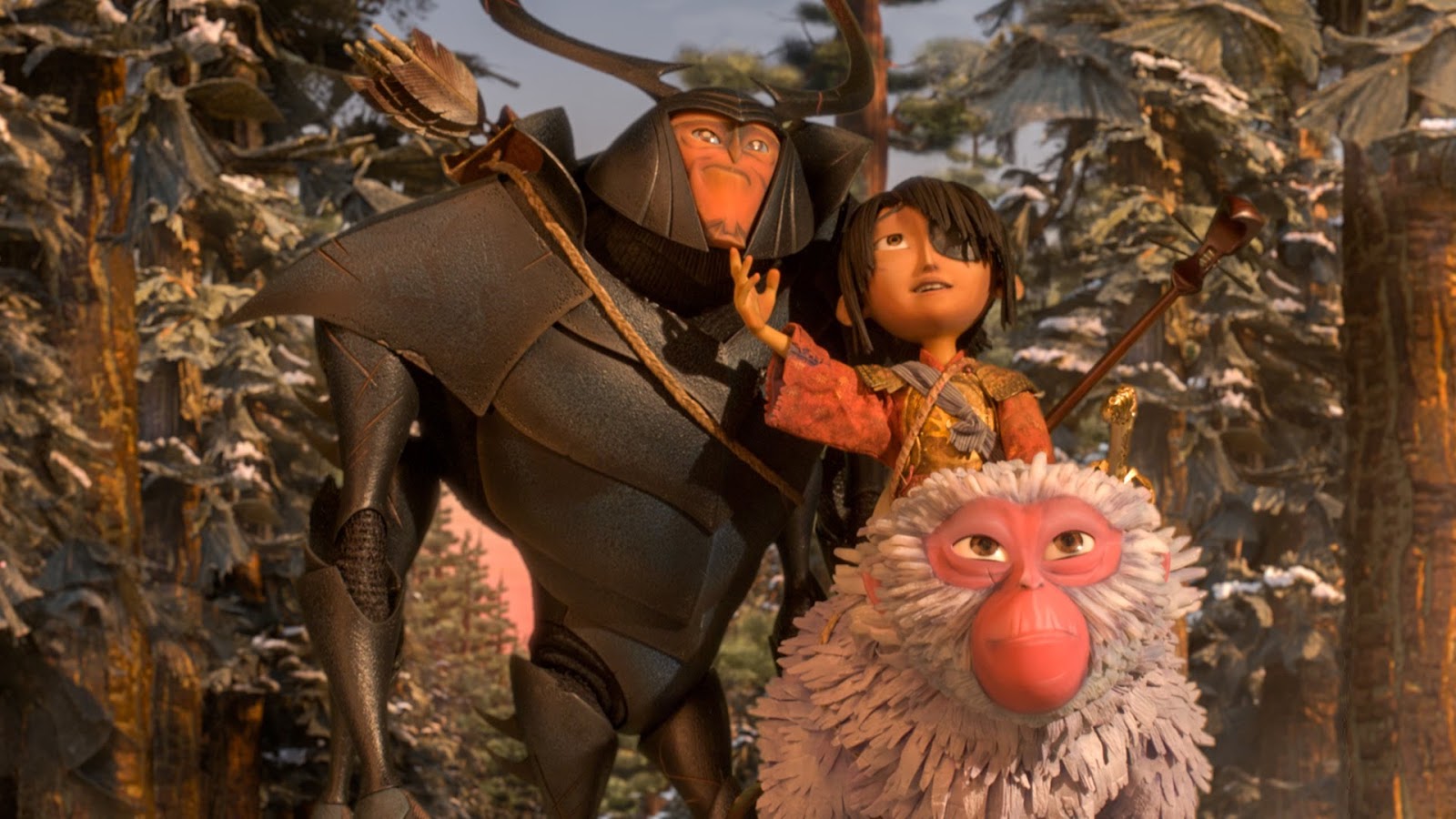
3: Kubo and the Two Strings

The latest offering from Laika may have been another stop motion that uses miniature figures, but it as epic and grand in scale as any sweeping adventure film of recent memory. The animation on display here is stunning to behold with beautiful craftsmanship that carries over onto every aspect of the design, from the characters to the landscapes, the set pieces and the tiniest of details, it all looks exquisite. Despite a fairly basic plotline and a rushed ending the film carries such immense thematic weight that deals with issues such as morality and legacy that one can forgive it for its other small shortcomings, as well as a terrific all-star voice cast that helps make ‘Kubo and the Two Strings’ absolutely fantastic.
2: The Handmaiden

Despite being a patient and methodical film Park Chan-wook has not lost his ability to craft psychologically twisted tales of power and imprisonment, as seen with his latest offering ‘The Handmaiden’. Despite the seemingly docile nature of upper class societies and financial cons Chan-wook is able to evoke a sense of visceral horror out of the scenario and characters that will stay with you long after the credits have rolled. His meticulous direction is on top form here, soaking in the vast and expansive details of this elegantly crafted world, and this approach only gives the viewer more time to contemplate the thought provoking and involving emotions on display throughout.

1: Hunt for the Wilderpeople

I will concede that on the craftsmanship front, ‘Hunt for the Wilderpeople’ is less deserving of being placed here than the other superb offerings this month. But when it comes to emotional involvement, intriguing and interesting characters that drive a wondrous plot of bonding and adventure then Taika Watiti’s latest film lands at the top. His coming of age parable is as heartfelt as it is hilarious and rather than reduce its main characters to cheap caricatures, it revels in its own unique identity and uses it as a way to evoke unmistakable empathy for everyone involved. The on screen paring of Sam Neil and Julian Dennison is not to be missed as well as some hysterical supporting characters that serve to further flesh out this bizarre and inventive world Watiti has created.

And the worst……

The Sea of Trees

Despite going into the 2015 Cannes Film Festival as a hot favourite, Gus Van Sant’s latest film was met with such a harsh critical reaction that it sat in purgatory for almost a year. During that time I almost became more intrigued to see it, questioning whether it really could be as bad as the early reactions indicated. As it turned out it may have been even worse. It is intellectually insulting, emotionally manipulative and such a waste of the great talents that are Matthew McConaughey, Ken Wantanabe and Naomi Watts that it doesn’t even feel like it’s worth the effort to stand up and boo it.

Friday, 30 September 2016

The Handmaiden


It says a lot about a director with the skill of Park Chan-wook when you acknowledge how he can take a story about imprisonment, disembowelling people with hammers and accidental incest, then take a story about high class society, love triangles and financial plots only to achieve the same viscerally thrilling and haunting results with both of them.

In a Japanese occupied Korea, 1930s, con man Count Fujiwara (Ha Jung-woo) hires a pickpocket named Sook-hee (Kim Tae-ri) to become the maid of the mysterious and fragile heiress Lady Hideko (Kim Min-hee), in an attempt to seize her wealth. But the story takes a tawist when the lady falls in love with her maid.

What struck me most about Park Chan-wook’s ‘The Handmaiden’, rather surprisingly, is just what a clash of cultures it represents. While taking a Victorian crime novel, Fingersmith by Sarah Waters, and resetting it within a Japanese occupied Korea (a location that will undoubtedly hold deeper relevance for its native country though one can take a surface glance and deduce that the subject of oppression and subjugation probably plays a part) would undoubtedly result in various sensibilities in how the story itself unfolds, the way in which Chan-wook chooses to structure and frame his story feels reminiscent of many famous directors from Kubrick to Kurosawa, all wrapped up in his usual psychologically twisted nature.

Being told in three parts with a clear structure that establishes, subverts and often outright destroys any expectations you may have built up over the course of the film, ‘The Handmaiden’ speaks volumes about characters who want to escape the lives they are born into. Each new perspective of the story underlines a hidden motive or a new characteristic that can shed light on their innermost desires, be it freedom, acceptance or luxury. The result is that by the end of the film not only do we have a complete understanding of the meaning behind every characters actions (that are sometimes revealed in a non-linear fashion) but we feel a genuine sense of gratitude for the complex portrait that has slowly been crafted over the course of the movie.

Despite being set in the 1930s Chan-wook’s direction has an almost timeless sense to it. His impeccable compositions and synchronistic framing gives the isolated environments a sense of entrapment that can reflect his characters own personal issues. The design is so impeccable that it only highlights the amount of detail and patience taken in capturing them, it is not a thriller that feels concerned primarily with rushing through each plot point as it is one that allows you to soak in the environment and characters in order to understand why the eventual twists and turns in the plot are as significant as they are made to appear.

The characters in question find themselves at the centre of a narrative that is most definitely about power, perversion and sex. While I won’t delve into spoilers I can say that the film is both visually and thematically steeped in sexuality. I’m somewhat divided over whether or not it can be labelled as gratuitous to a certain extent. While at times it is made to feel exploitative in order to reflect the mood of the film itself when Chan-wook wants the love scenes to have more dramatic heft to them it still has an uneasy sense of longevity that risks coming across as unnecessary, especially one in the final few minutes of the film. That being said the way its presented ties in suitably with the thematic meaning behind the scene, as in a film where sex is so often used by characters a means to an end in order to gain power or money of some kind, it’s almost gratifying when the act is committed between two people who are genuinely emotionally connected to one another.

Clocking in at 145 minutes the film suffers slightly in its pacing, where not every section is quite as riveting as another and having established so many interconnected storylines the process of concluding them all at the end is a lengthy one as well. Just when you think the main story is over the minor details still have to be swept up. But by employing this hyper sense of reality Chan-woo brings forward a greater sense of tension and an almost operatic feel to the film as the varying events play out. It also helps that the performances are fantastic across the board with each unique perspective feeling fully realised due to the conviction with which each actor plays their role.   

Exquisitely detailed and emotionally involving as well as viscerally disturbing on some levels, ‘The Handmaiden’ stands as one of Park Chan-wook’s most elegantly crafted films yet.

Result: 9/10

Wednesday, 28 September 2016

Talkin' Scorsese: The Age of Innocence


"You gave me my first glimpse of a real life and then ask me to carry on a false one. No one can endure that." 

Though an 18th century period piece would initially appear to be a deviation from Scorsese’s usual calibre of filmmaking. However as he has proven time and time again, he is a director that applies his own themes and sensibilities to the subject matter at hand. His crime movies are about codes, ways of life and honoured agreements that entrap and imprison those who occupy them, his film about high society follows a similar pattern.

Newland Archer (Daniel Day Lewis) is planning to marry the respectable May Welland (Winona Ryder). May's cousin, the Countess Ellen Olenska (Michelle Pfeiffer), has returned to New York, which causes a shock in society circles due to her unconventional views. As a result Newland becomes increasingly disillusioned with his new fiancée May and her innocence, lack of personal opinion, and sense of self.

So while on the surface this sounds like a standard love triangle that any filmmaker could knock out in their sleep, Martin Scorsese once again managed to look deeper into the themes and resonance of the script and bring forward his own central conceits and ideologies that would evoke more thought provoking ideas and messages from the film. Based off of the book of the same name by Edith Wharton the film is not about reliving the trivial dramas of socialites, it is about examining the way the characters’ lives are dictated by the society they inhabit. How social conventions result in each one of them having to uphold certain expectations and how that can conflict with their own personal desires.

Just because the film lacks gunfire and gangland violence does not make it any less brutal than Scorsese’s previous efforts. The emotional powerhouse on display from a man’s [passion being slowly crushed to the suppressive nature of the society he occupies. It is frequently tragic and poignant to an almost painful extent, not only because the script is able to craft such empathetic characters but it so fully fleshes out the world they inhabit that their inevitable heartbreak seems to crushingly unavoidable that we are almost disheartened that we even dared to hope that the outcome could be anything else.

But one of the elements that makes this environment feel so fleshed out is, as always, Scorsese’s direction. In the past he has employed his flashier and more flamboyant techniques to reflect a characters state of mind but here Scorsese’s camera simply observes. He takes note of the smallest and subtlest of moments and it is through these actions and observations that we not only perfectly understand each characters motivations without it ever being truly explained, but also the way society around them restricts their every inflection and gesture. Not only does that atmosphere create an impression that hangs over the rest of the movie and establishes a clear motivation for every decision on display, but when some passionate moments do seep through they seem all the more daring for it.

This technique requires immense patience and one would think that may be difficult for a director known for crafting films of such high energy like Scorsese. But once again he is able to defy convention and move his camera slowly through the high society. Normally he never relies on static shots and though the camera is never still within ‘The Age of Innocence’ it moves at such a slow pace that it gives the viewer time to soak in the rich details of the surroundings and when he wants it to the director can plant his camera directly into a conversation. It does not seek to alienate or separate the viewer from the characters, instead it serves to implant it directly within their establishment.

The performances in question are superb, as one would of course expect from the likes of Daniel Day Lewis and Michelle Pfeiffer. Though it’s not as explosive as the roles that would earn him a place among legends, Day Lewis’ performance here is a restrained but effective one. He is extremely confident as the more conflicted figure, caught between his devotion to upholding society’s expectations and fulfilling his own desires. Pfeiffer’s performance is one that leaves much up to interpretation, the way she cuts through conventions and seems to take delight in seducing Newland with the power of her opinions. The biggest surprise though could be Winona Ryder, as the way her character’s arc is written and structured allows her to reveal hidden depth and complexity within her performance, but she is able to convey all of this with great conviction and is ultimately integral to the final emotional punch that underpins the movie.

Stunningly directed and beautifully constructed as well as emotionally riveting, ‘The Age of Innocence’ is an off kilter genre for Scorsese but one that he can pull off with equal brilliance.

Result: 8/10

Monday, 26 September 2016

The Magnificent Seven


"Every man's got the right to choose the way he dies."

It seems that with the slew of remakes we have experienced in recent years people have been relatively indifferent towards a remake of 'The Magnificent Seven’. Instead of the usual cries over how Hollywood could tarnish another classic or asking whether anything is sacred anymore people seem more curious and interested in this reimagining. Mainly because the original is itself a remake of Akira Kurosawa’s action masterpiece ‘Seven Samurai’ and despite its legacy ‘The Magnificent Seven’ leaves room for potential improvement, it just depends on whether they can find it.

Following a series of raids and murders committed by the a corrupt industrialist (Peter Skarsgard) upon the small mining community of Rose Creek, widow Emma Cullen (Haley Bennet) recruits a bounty hunter named Sam Chisholm (Denzel Washington) to help them. In turn Chisholm recruits six other gunslingers (Chris Pratt, Ethan Hawke, Vincent D’Onofrio, Byung-hun Lee, Manuel Garcia Rulfo and Martin Sensmeier) to aid the townsfolk.

Like the 1960 film of the same name, ‘The Magnificent Seven’ relies heavily on the charisma and chemistry of its cast to elevate a fairly standard plot. That is not necessarily a criticism as that simplistic plot is intrinsically linked with anything attempting to reimagine ‘Seven Samurai’ as Kurosawa practically invented a dozen action tropes that are still being used to this day. In fact that simplicity can act as more of a strength due to the breathing room it gives a filmmaker to deepen and expand the characters within that story. Sadly that isn’t quite the case here.

If there is one thing that is evident throughout ‘The Magnificent Seven’ it is that Antoine Fuqua has a deep passion and love for the western genre. You can tell this not only in the way his movie indulges in the usual trappings of a western (there is literally a scene in which a character walks through some swinging doors into a saloon only for everyone to star at him and the piano player to stop tapping out a tune), but also in the smaller details that firmly route this film within the genre. Credit where it’s due this is not, as I feared it would be, merely an action movie wrapped in the aesthetic of a western. It is a full blooded and lovingly crafted addition to the field.

Mind you, as someone who is a big fan of the classic western, I happened to enjoy these aspects quite a lot. There was a unique pleasure to see these tropes being executed without a hint of cynicism or parody and they rarely feel cheap or forced. Not only that but numerous other aspects suit the idea of a modern western very well, particularly the action which is accompanied by long awaited standoffs to make the heart pounding moments feel earned as well. I don’t simply want to say that a modern western equates to bigger and louder but in this case that is an accurate description. There is definitely a grandiose aspect to this remake that makes it feel all the more realised and Fuqua is able to direct is very well, with no cheap gimmicks like shaky cam or quick edits, instead we get real stunts and just good filmmaking.

But going back to my earlier point about characters, because that is really where the film falls flat. While they each have decent chemistry and the cast themselves all do a good job distinguishing themselves as unique presences within the story, the way they develop comes across as either rushed or lacklustre. For example, Ethan Hawke’s character has a backstory involving PTSD from the Civil War and while it’s addressed from time to time, it inevitably disappears with little reason behind it in order to get back to the action. While the cast as a whole are enjoyable to watch the likes of Washington and Pratt feel as if their charisma isn’t being fully utilised despite being on display to a certain degree. Not only that but with the group spending essentially no time with the villagers they are supposed to be protecting there is less of a connection between the two groups and inevitably we are not as invested in their sacrifice.

But maybe this approach to establishing the central seven as presences rather than characters relates to the overall message of the film. It never seeks to look under their skin and question the invulnerability of the cowboy icon. In fact I’m going to have to dip into minor spoilers to fully convey this point about how certain differences in ‘The Magnificent Seven’ highlight what could be a big change in modern moviegoers. In both ‘Seven Samurai’ and 1960’s ‘The Magnificent Seven’ the ending stands as a sombre reminder of the warriors sacrifice and explains the notion that once they have accomplished the peace they set out to achieve, the warriors have become obsolete. Despite their victory they face an uncertain future in comparison to the farmers return to normality and their sacrifice stands as a reminder of the price they paid. The final moments are not about glamourizing the western myth, but deconstructing it. However the 2016 remake is almost the complete reversal of that. Firstly because instead of noting the end of an era and closing with the words of “We lost. We always loose” as the original did, the remake concludes that the sacrifice and bravery of the cowboys will make them legends. That is a slight deviation from the theme the original was trying to convey and its made even worse when it is revealed that Washington’s character had personal reasons for being involved with the conflict that involve revenge. Not only does the movie refuse to acknowledge any notion that the cowboys are not the victors, they parade the myth of the west more so now than the 1960 version did. Despite the common impression that modern movies are more cynical than those of yesteryear, it is the movie made sixty years ago that takes a more pessimistic and ultimately more complex view of a cultural icon. What does that say about us as an audience?

More moderate than magnificent, but still enjoyable.

Result: 6/10

Sunday, 25 September 2016

The Light Between Oceans


"One day, this will all feel like a dream."

A lot of people had a good year in 2015, and two of those people were Michael Fassbender and Alicia Vikander. With Hollywood’s most recent power couple (insert some kind of reference to Brangelina here) each being part of a string of critical successes from ‘Ex Machina’ to ‘Slow West’ and each securing an Oscar nomination with ‘Steve Jobs’ and ‘The Danish Girl’ with the latter winning the award for Vikander. So their latest project together is something that should peak anyone’s curiosity.

A lighthouse keeper named Tom Sherbourne (Fassbender) and his wife Isabel (Vikander) live on an isolated island, cut off from the rest of society. One day they rescue an infant girl adrift at sea and adopt her as their own. Years later, the couple discovers the child's true parentage and are faced with the moral dilemma of their actions.

Given Derek Cianfrance’s track record (‘Blue Valentine’, ‘The Place Beyond the Pines’) of using the structure of his movies structure as an emotional sledge hammer as well as the terrific performances on display in all of them, how they convey and advance the central conceit of the film and further draw you deeper into the world being created on the screen, I was somewhat disappointed with just how predictable ‘The Light Between Oceans’ was. That is not to say the film is without redeeming qualities, but the structure and pace not only felt very conventional in their execution, but also drifted into a state of repetitiveness and simplicity.

The result of this is that not only does the movie inevitably feel tired and tedious to a certain extent, but it feels as if there is a lack of trust between the storyteller and his audience. It’s almost as if the movie is so worried audiences won’t be able to understand what is transgressing on the screen that they feel forced to repeat narrative beats and emotional pivots. Of course this repetitive feel could be an attempt to pan the running time but if that is the case then it comes as little consolation, as at 133 minutes the film’s pacing ultimately suffers and cutting it down by thirty minutes or so wouldn’t have hurt it at all. Instead of a tightly constructed, emotionally heavy drama the end result feels unfocussed and a little manipulative in how I tries to work in extra emotional beats where none exist.

However, the crux of the film has always been the performances of Vikander and Fassbender. Their roles are reminiscent of a far better movie that this could have been. Fassbender’s performance is a measured one, brimming with confidence and a need to protect his own domain and family. Given that Tom is a man battling PTSD from World War 1 and burdened by the randomness of life and death Fassbender uses subtle tactics to bring each conflicting aspect forward time and time again. He fully conveys the essence of a man separated from most, content with the company of just one other person. That aspect of Fassbender’s performance in particular seeks to make his on screen relationship seem that much more believable and truthful, you gain a sense of their bond as well as their emotional attachment to one another.

Vikander is equally fantastic in her role. In many ways eh is the polar opposite to the kind of performance Fassbender has to give. Whereas her male co-star portrayed a character who battled inner demons and contained his emotions, Vikander lets her own feelings run wild in the open air, meaning that more of the explosive dramatic scenes belong to her. Sadly the film itself doesn’t give her enough time to fully develop the character to the extent that would have made her a truly equal counterpart to Fassbender, but when she gets the room to breathe Vikander’s talent is easy to spot from a distance.

I am however, slightly frustrated with how Cianfrance chooses to shoot his actors and wish he could do so with the same skill with which he shoots the landscape, which is exceptionally photographed and composed. But when it comes to capturing the sentiments of his actors, he pushes the camera right up to them, as if forcing the audience to sink into the central emotions. While this technique can be effective at times, it is used so frequently and under such misguidance here that it becomes a distraction and while I would never call it detrimental to the film itself it does seek to continually take you out of the moment, and the film already has enough problems that any element that puts further distance between the audience and the filmmakers has a negative effect.

Despite being anchored by two impressive performances from Fassbender and Vikander, ‘The Light Between Oceans’ is too unfocussed and too simplistic in its execution to be the great film it should be.

Result: 5/10

Wednesday, 21 September 2016

Blair Witch


"Do you believe in the stories about the Blair Witch?"

The world was a very different place way back in 1999, and some of that is epitomised by the fact that ‘The Blair Witch Project’ was as hugely successful as it was. The phenomenon arrives at a unique time for the horror genre, one where in a world at the forefront of the media saturation, reality TV and viral marketing were more than ready to get behind a somewhat staged performance that appeared real. One wonders if it is even possible for another instalment of the franchise, in this day and age to replicate that success.

James Donahue (James Allen McCune) and a group of fellow college students along with their local guides venture into the Black Hills Forrest in Maryland in order to try and solve the mystery surrounding the disappearance of James’ sister Hanah, but what they find is far from what they expected.

In all honesty the most enduring legacy of ‘The Blair Witch Project’ (aside from creating the found footage genre which has only spawned thousands of hours of lazy, uninventive and poorly realised “horror” films) may be its advertising campaign. It went to great lengths to propel the idea that the events of the film were factual. When it premiered at Sundance audiences were given flyers asking if they had seen any of the “missing” students. As it toured through college campus’ none of the cast members would ever be present, just a representative of the studio to say “Here’s this film we pieced together, what do you think?” The movie’s webpage contained fake police reports and witness interviews sparking heated debates on whether it was real across the internet, they studio even distributed a few bootleg copies of the film before it hit theatres to suggest that maybe these kids really were lost, and this underground documentary was now being paraded for the sake of profit.

But enough about that, what of this new version by Adam Wingard? In all honestly to call it “new” is doing it some favours. Part of me wonders if some studio head was upset that advances in amateur camera devices had made the original ‘Blair Witch Project’ seem dated and set out to revamp it with drones, camera phones and better quality cameras. All in all ‘Blair Witch’ is almost an exact rehash of the first instalment, cutting out certain elements like the interviews which lessen the sense of realism that made the original memorable, while adding a few GoPro shots to make it feel more modern.

It is legitimately surprising at the lack of innovation within ‘Blair Witch’, especially from a director like Wingard who has established himself as a genre twisting, inventive mind in the horror genre. His skills behind the camera are on display here, at least on a visual standpoint, but they are rarely used to convey or display anything original.

Of course this is hardly the first time a sequel has repeated similar beats of its predecessors, from ‘The Force Awakens’ to ‘Creed’, from ‘The Last Crusade’ to ‘Toy Story 3’. However what separates those movies from a sequel like ‘Blair Witch’ is how it refuses to expand upon any of the ideas brought up in the original, nor does it serve to bring any new concepts of characterisations to the table. While James is given a decent motivation the characters soon devolve into interchangeable blank slates whom I have little interest or investment in.

If anything ‘Blair Witch’ feels like a step backwards from a filmmaking perspective. The camerawork may be technically superior to the old movie but it reduces the authenticity of the film and lessens the fright factor. Not only that but with an abundance of jump scares and fake outs that only serve to further reduce the tension and atmospheric nature of the film. It becomes infuriatingly repetitive and with shot after shot of people just walking through the woods, almost following a formulaic sensibility of when to insert a character jumping in front of the camera, or a noise in the distance to create a false sense of tension to ensure the audience doesn’t fall asleep.

There are moments that work, scenes in which the dense woods is made to feel claustrophobic and the ambiguous nature of what these characters are looking for hangs over them with an unnatural feeling of dread. But while the found footage genre isn’t exactly renowned for its subtlety, the sound design for ‘Blair Witch’ is shockingly atrocious. It seeks to numb the audience into a state of fear by throwing one booming noise after another, almost trying to obliterate your senses with its loudness.

Not only does ‘Blair Witch’ become a rehash of the original, but it falls victims to the tropes and clichés of a dozen terrible horror films since 1999, from the jump scares to the all-consuming noise.

Result: 4/10 

Monday, 19 September 2016

Andrei Rublev: A Film of the Earth

One of the things that marks Andrei Tarkovsky as one of the greatest directors of all time is his completion separation from every filmmaker before or after him. Despite the fact that homage and imitation are regarded as part of the course in movie making Tarkovsky never expressed a desire to mimic any of his fellow filmmakers, he sought to be unique in order to make a genuine contribution to cinema as an art form he sought to capture film as a true personal expression, he would use his camera the way a painter would use his brush.
I use that particular metaphor in order to make a connection to what may be Tarkovsky’s defining masterpiece, ‘Andrei Rublev’ (though when you only make seven films and your worst performance is an 82% rating on Rotten Tomatoes, it’s rather difficult to choose a definitive masterpiece, out of ‘Ivan’s Childhood’, ‘Andrei Rublev’, ‘Solaris’, ‘Stalker’, ‘The Mirror’, ‘Nostalgia’ and ‘The Sacrifice’, they are all worthy of immeasurable praise). Technically speaking 2016 marks its fiftieth anniversary, I say technically because it was only screened once in 1966 before being pulled by censors, only to be shown again at the 1969 Cannes Fil Festival before it was finally re-released in the Soviet Union in 1971, only to go through another treatment so it could be shown in the U.S in 1973.
Considered to be the most ambitious biographical film of its era, ‘Andrei Rublev’ is loosely based upon the life of the icon painter of the same name, set against the backdrop of an unstable and violent land that is medieval Russia. Tarkovsky often referred to his movie as “a film of the earth”, one that displayed as much complexity in its texture and elemental aspects as it did in portraying its main character. Every shot has such a beautifully tactile feel to it, drawing the viewer in with its composition and layers of staging. The film is about the history and culture of an entire country as much as it is about its title character. Rublev is not merely the focus of the film, he is the vessel from which Tarkovsky carries his audience through this bleak and violent world. From observing the suffering of peasants to the cruelty of warfare as well as the pressures of the aristocracy and what place art has in this frenzied environment.
Tarkovsky’s description is an accurate one most definitely. He projects the real world onto the screen through naturalistic components. Everything has a real and visceral feel to it, but they also serve to make each scene look more dynamic and complex. But these elemental aspects are not simply present to give a scene some visual flair, they are included to enhance the emotion of each scene. By placing his otherworldly hero in such a chaotic and alien environment Tarkovsky creates a heightened sense of awareness not only for the characters on state of mind but their struggle to find a place within the world. The movie opens with a seemingly unrelated prologue that portrays a man attempting to achieve flight via a hot air balloon, but on a closer inspection the scene is there to lay out the complex world our title character will have to navigate.
This is one of the reasons why many of the key scenes within ‘Andrei Rublev’ have such an elemental feel to them and rarely allow themselves to be contained to a single level of depth. Rain can become a cleanser and symbol of relief, irregularities within the land can reflect the emotional turmoil that the characters must overcome and a burning mass can be on hand to witness a moment of horrific realisation. Even the individual dust particles (somehow captured with such stunning accuracy in the 1960s) can represent an unsaid tension in the air of a scene.
It all sounds very methodical, but don’t think for a moment that Tarkovsky was above letting emotions rule his style of filmmaking. Above all else there is an almost unexplainable sense that everything in front of us was shot with an instinctive perception of how best to evoke the inner emotions from every audience member. Maybe it arises in ‘Andie Rublev’ out of a common connection between both Rublev and Tarkovsky, one that goes beyond than sharing a first name. An artist who almost feels inadequate to answer for the chaos of the world he inhabits, whose own principles hinder his career (from Rublev’s refusal to use his talents as a painter to exploit people’s fears of the eternal damnation by reputing the Church’s request to Tarkovsky risking his own credibility by not simply pandering to the Soviet regime, the only sure fire way to ensure your films were made in such an environment) or the fact that in a world of turmoil their work, for all its controversies, was embraced as a national symbol.
This could be why the main theme of ‘Andrei Rublev’, amid its comments on religion and politics, is that of artistic freedom and the pressures of working as an artist under an oppressive regime. It attaches such great significance to the role of the artist and paints him as such a conflicted and complex persona that by the time the film reaches its epilogue that displays Rublev’s surviving work in all its glory, it only seems more miraculous.
One role of an artist is of course to observe the world around them and Tarkovsky’s camera work allows viewers to do that tenfold. His signature use of long takes allows the viewer to adopt a meditative, almost existential state of mind. Tarkovsky’s shots are filled with metaphysical elements, abstract imagery and intellectual themes but ultimately what separated him as a master of his craft was his ability to evoke such deep and complex emotions from those shots. Inevitably there comes a time when you can stop analysing and interpreting and just feel the weight of the world around you and reach the emotional core of each scene.
In fact half of what many people interpret from ‘Andrei Rublev’ is likely to be more atmospheric than symbolic. The film does not tell a definitive beginning-middle-end story and instead divides itself up into eight chapters, each of which is only loosely related to the main film. In fact for a film about a painter there is in fact very little painting on display. We have segments depicting religious persecutions, massive construction projects, vows of silence, conflicts of conscience and destructive military invasions that burns an entire city down to the ground.
The way Tarkovsky commanded time and space within his movies was unparalleled, and he used this command to pull in varying elements that made his movies feel more like a form of visual poetry. Throughout ‘Andrei Rublev’ his compositions, landscapes, philosophical discussions and meditative techniques all serve to bring an extra dimension to his style of filmmaking. His films create this meditative state to reflect their characters inner struggles. ‘Andrei Rublev’ is littered with people trying to find their purpose in life, from rival painters who are jealous of Rublev’s own talents and as a result are unable to deal with their own inferiority, to the young bell maker for whom the burden of living up to his father’s reputation rests on him with crushing weight. It’s one of many reasons why throughout the film Tarkovsky never asks the viewer to understand the meaning behind the scene, he asks simply that we understand the emotion of the subject.
This relates back to how the film itself is a collection of moments rather than a definitive story. We are not experiencing the life of an artist simply by having the events of said life played back to us with no significance. What Tarkovsky accomplishes within ‘Andrei Rublev’ is actually an even greater achievement, he uses a select group of scenes to convey what shapes and influences a character, what drives them and why they react the way they do to later events. He displays what is significant to the central character and his camerawork end up replicating what both the viewer and the character take interest in, almost like a train of thought that tracks each event on a level we’re only subconsciously aware of.
What makes all of this even more remarkable is the way Tarkovsky separated himself from other auteurs of his and every other era. His techniques were completely his own and he reportedly went out of his way to ensure his style was not mimicking or impersonating that of another director. It’s for this reason that many regard Tarkovsky as not only a director who conveyed such astonishing emotion and deep symbolism but also one that invented an entirely new language, unique to the art of cinema.
“Tarkovsky is for me the greatest, the one who invented a new language, true to the nature of film, as it captures life as a reflection, life as a dream." – Ingmar Bergman.